
I set out to find out…
What do you do with a sad, unloved park that’s a perfectly good public space, except there’s never enough of a public to using the space. If people don’t use it as a park, is it still a park? What’s it good for? It doesn’t generate any tax revenue fund city services. It doesn’t provide housing or shelter. It offers no entertainment, no amusement, no swings, no playground. It’s just slabs of concrete, dirt, and trees.
So is an unloved park wasted space or a blank canvas?

People pass through this park all the time on their way in and out of the Wooster Square neighborhood. So, why didn’t they stick around to enjoy it as a park? Perhaps people need a socially-acceptable reason to stick around–– if you’re standing or even sitting on the grass in a place that’s not socially-accepted as a park, you look like you’re loitering.
Optically, what’s the difference between leisure and loiter? Very little.
Practically, the difference might be in intentionality. You leisure around something enjoyable––whether it’s entertainment, scenery, or food. In any case, something, some experience must be attracting you to stay. By contrast, you loiter when you have nowhere else to go, and that’s why it looks distasteful to the onlooker.
Create a reason to stay
Assumption: people come out to experience things, and/or to watch other people experience things. Crowds generate crowds.
Take, for example, Washington Square Park in NYC on even a mildly warm day. What’s there to see? The park is always visible, but on a warm day you can see the park and more importantly throngs of other people who come to see the park (and you).
Conclusion: So, if I make the case to a few people to sit and enjoy the park, others will follow, or at least see the park as a place to enjoy. So, my target is to create an audience out of just a handful of people.
Execution: getting a handful of people to stop a while and gather is easy. Every high school club knows the drill. Provide food.
But, I wasn’t about to hand out free cookies in the park and try to get people to hang out with me. That’s a surefire way to scare people away from the park forever. People already think it’s filled with loiterers and trash, I didn’t need to give them a reason to believe that cookie-bearing weirdos terrorized it, too.
However, if I make people pay for the cookies, along with coffee and iced-tea, then I’m not a weirdo, I’m an entrepreneur, and if there’s one behavior we as a society understand and trust, it’s a person trying to make a buck. Suddenly, the risk boils down to that of a simple market transaction. Onlooker thinks, “I’ve purchased coffee from a street vendor before, this isn’t that different. And, look, there are cookies for sale! And I can sit. I’ll sit a while and enjoy this coffee and cookie I just purchased from this non-threatening street vendor.”
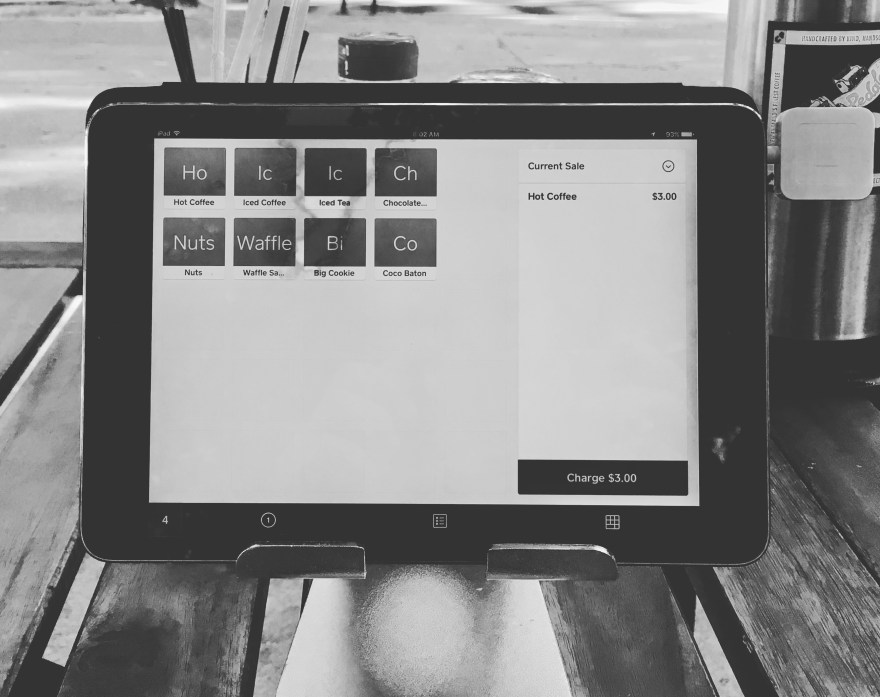
Plan: set up patio tables in an empty park, sell coffee & iced tea with a Square terminal, and see if people come and hang out where they otherwise wouldn’t. Observe if others join, if they start talking to each other, if a scrappy park becomes a hangout spot.
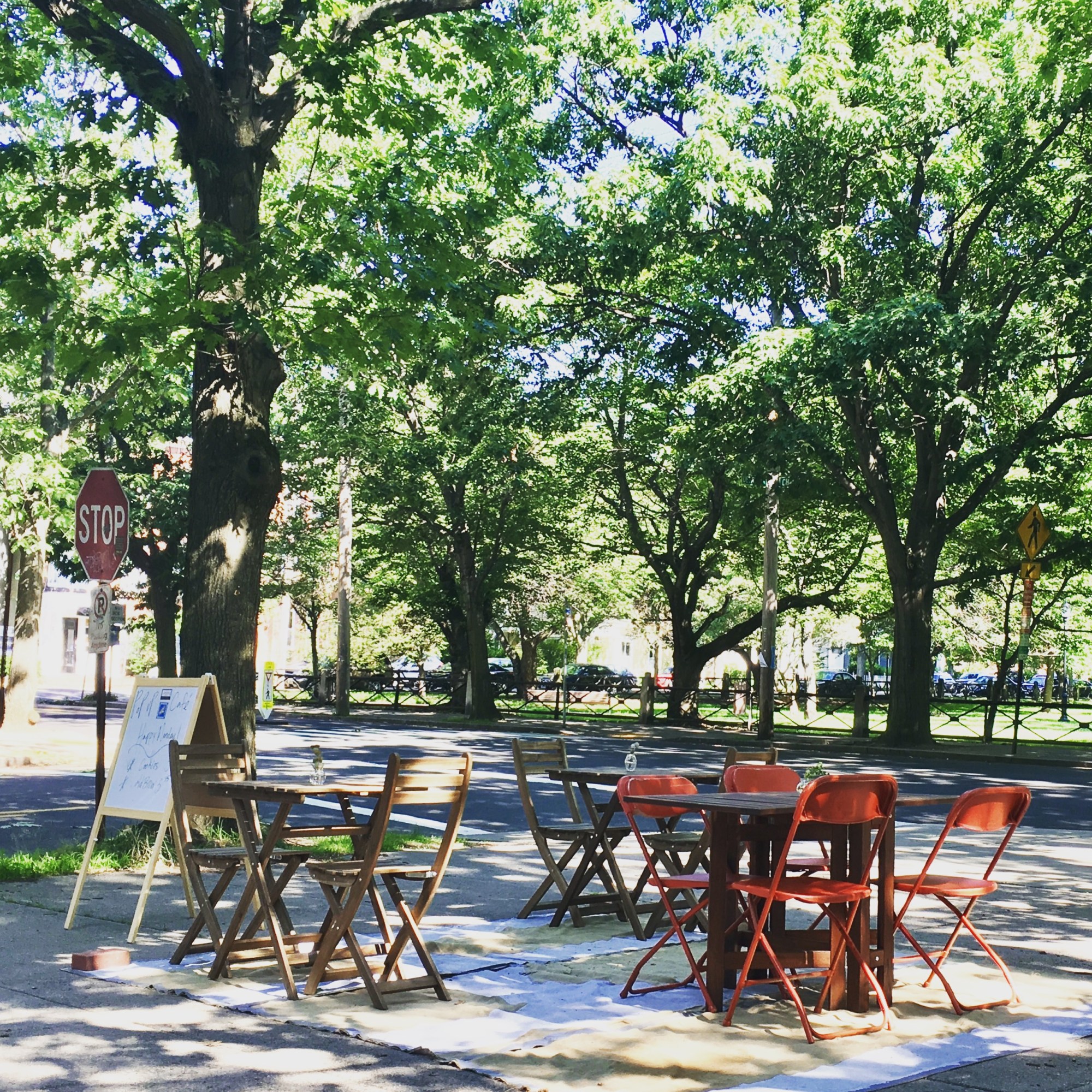
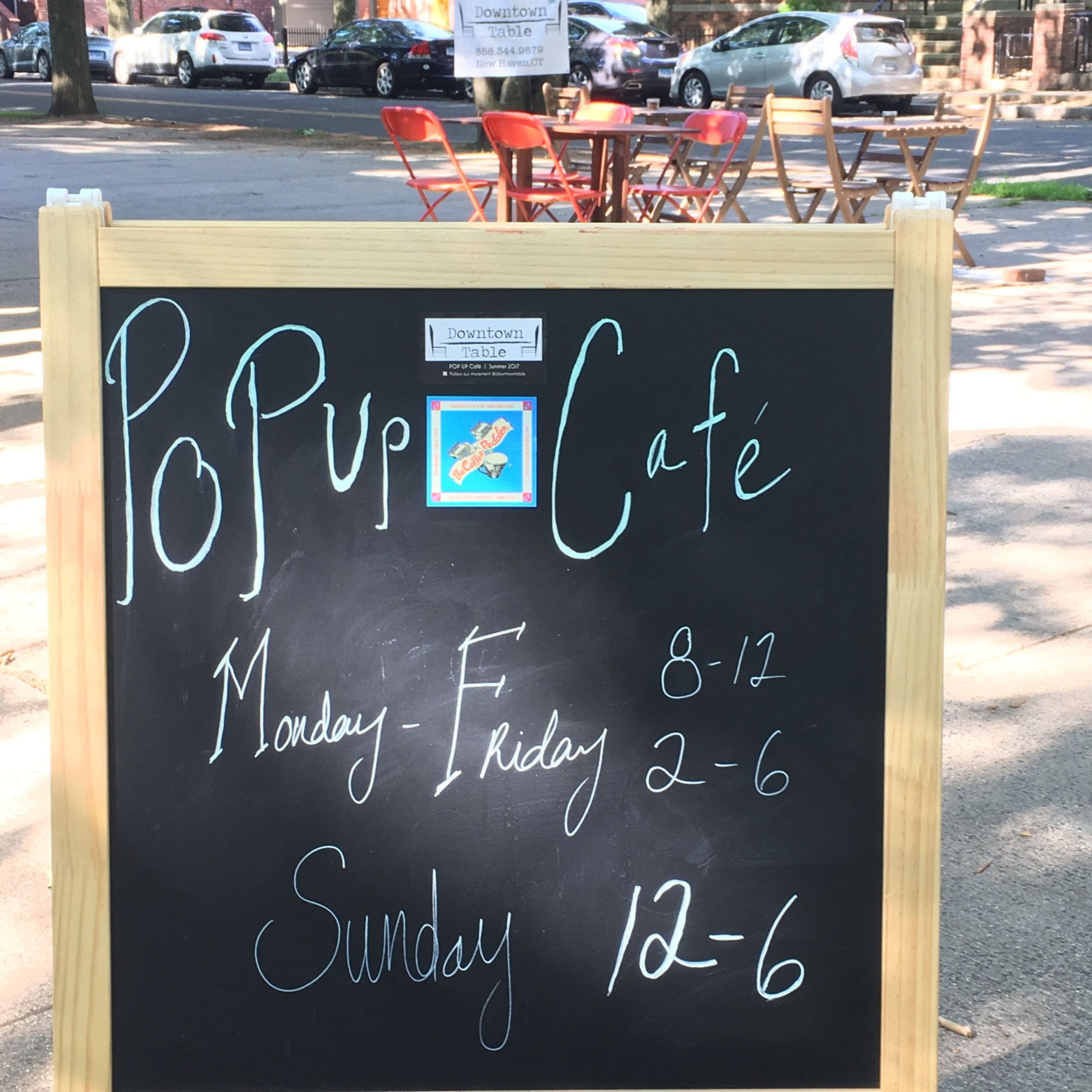


The PopUp Mobile Café
Operation: I sold coffee & cookies in the park Sunday through Friday for about a month and half and stopped a day or two before starting law school. In total, I sold nearly $1,500 worth of coffee & cookies, at $3 a piece––which is a lot of retail activity for a someone whose operation consisted of a Square terminal and a few carafes of cold brew.
I served a lot of people. I met a lot of people. I had regulars. People would come and bring their lunch. Some would chat with me. Some would just listen to the music I played from a portable speaker. It was sweet and simple.
Takeaways: commerce brings people together and frames their interactions as simple, benign, market transactions. Once people have their selfish needs taken care of––they have somewhere to sit, a cup of coffee, music to listen to ––, they really open up to social interactions with strangers (me). They’re often even emboldened to perpetuate the socializing process (e.g., calling people over, engaging even more people to join the party.) When that happens a few times, all of a sudden, you have a crowd.
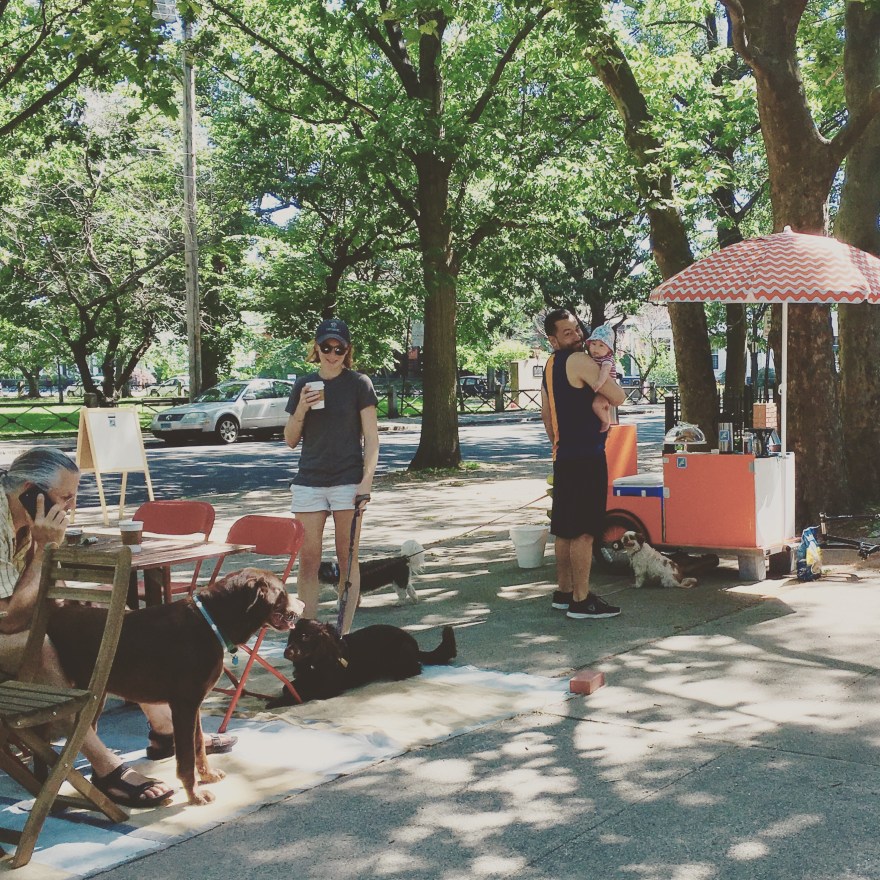
Crowds scale. The magic number is 2. It takes going from 1 person to 2 people in order to get from 2 to 3, from 3 to 10, from 10 to 50 people.
Cities and developers who talk of building community and placemaking needn’t look any rack their brains. Public art, fountains, fancy restaurants are nice, but not necessary. You need one to two nice points of sale that are clean and welcoming. Attract a few people with the opportunity to buy a waffle or a beer and enjoy it sitting down, community will follow, so long as other people can see that enjoyment is happening. Visibility (outdoor/patio) and accessibility (price point) are key to achieve crowds and culture. And as every urbanist knows, crowds and culture are essential to achieve the ever-elusive concept of “vibrance,” aka life and joy that comes from living in community.

 Katherine McComic